We’ve all heard of slathering our bellies with cocoa butter during pregnancy to prevent stretch marks. But instead of just treating the surface issue, why not prevent stretch marks from the inside out?

By understanding how stretch marks form, it’s easy to see how you can help prevent stretch marks–with what you eat!
In her Beautiful Babies book, Kristen Michaelis has this to say about stretch marks:
“You can prevent stretch marks. Wanna know how? By increasing the elasticity of your skin! And that’s done through (you guessed it!) nutrition.
We’ve long known that your skin’s elasticity, firmness, and functioning are dependent on certain key nutrients. That’s why certain vitamin deficiencies cause skin damage, and why supplementing with the depleted nutrients restores skin health.”
from page 110 in Beautiful Babies
Collagen Formation: The Key to Preventing Stretch Marks
Retaining proper collagen formation is crucial for improving your skin’s elasticity. As Kristin says in Beautiful Babies:
“Collagen and skin elasticity go together like peas and carrots.”
How do you increase collagen formation? By eating more collagen! Which is also known as… gelatin.
Here’s what Kristen says about gelatin in Beautiful Babies:
“At least one study was done to measure the effects of supplementing with gelatin on skin elasticity, and found measurable improvement. Of course, the best-known food source of gelatin is homemade bone broth, especially those broths made from oxtail or chicken feet.”
Gelatin protein used to be a staple in our diets. While today we tend to focus on eating just muscle meats, traditionally the whole animal was cooked–including the bones and joints, which are rich in natural gelatin and minerals. Real homemade bone broth was used to make soups, stews, sauces and gravies. It was present at almost every meal!
Today our diets are sorely lacking in gelatin. Most of our protein comes from non-gelatin sources, and the foods we eat that traditionally contained gelatin (like soup or gravy) are now mainly made of flavorings and thickeners with no traditional bone broth in sight!
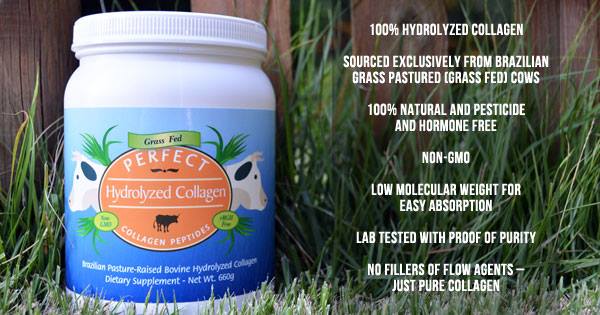
Here are two easy ways to add more gelatin into your diet to boost collagen production and help prevent stretch marks:
- Drink at least one cup of real bone broth every day. A cup with every meal is even better! Cook more with gelatinous broth by using it in savory sauces and gravies, or hearty stews and casseroles.
- Supplement your diet with high-quality collagen protein powder from grass-fed cows. This is my personal favorite brand of collagen or gelatin — and believe me, I’ve tried quite a few.
Gelatin: The Amazing Anti-Stress Protein
Not only does gelatin provide natural collagen, but the unique amino acids in gelatin (particularly glycine) are also known for their amazing anti-stress and healing properties.
Glycine and gelatin have the ability to:
- promote wound healing (great for after childbirth!)
- improve sleep
- fight free radical damage (also good for the skin)
- improve insulin sensitivity
- promote digestive health and reduce gut inflammation
- reduce joint pain
Want to Learn More About Nourishing Your Baby? Order the Beautiful Babies Book!

Did you know that simple changes in your diet can increase your fertility, lower your chance of experiencing morning sickness, and even minimize the chance your child will ever need braces? Kristen Michaelis of Food Renegade discusses all of this and more in her new book Beautiful Babies. In the forward, Joel Salatin says,
“I find Kristen’s feisty spirit and mischievous humor both empowering and liberating. As a dad of two, husband of one, and grandfather of three, I covet these historically proven and normal principles for every family on earth. I wish this book had been around when my wife, Teresa, and I were starting our family.”
Click here to order the Beautiful Babies book now.
You might also enjoy… this post on natural stretch mark prevention or this one on 10 easy ways to prevent stretch marks.
More Women’s Health Articles:
- 3 Secrets for How to Relive Period Cramps
- Get Rid of PMS Anxiety & Mood Swings for Good: 5 Root Causes
- How to Stop Anxiety



Does aging skin also benefit from gelatin? I’m 59 and have noticed in the past year that my skin just wants to “sag” no matter what I weigh or how much I work out.
Gelatin is definitely good for building collagen at anti age. Because it’s anti-stress, it can also fight sagging skin by reducing stress hormones levels. I believe cortisol is linked to sagging skin.
I love to idea of consuming grass-fed gelatin for a collagen boost to help with stretch marks. I looked it up however, and the FDA classifies gelatin as a Category C. Any thoughts?
Monica, that is a really good question. However, I’m having trouble finding where the FDA labels gelatin as a category C. Could you point me to where you found this information? I’d really like to look into it.
If you google the words gelatin and pregnancy, a huge box pops up and states Category C.
See here: https://www.google.com/search?q=gelatin+pregnancy&ie=utf-8&oe=utf-8&aq=t&rls=org.mozilla:en-US:official&client=firefox-a
Okay, I’ve been looking into this for a while today, and I can’t find any study that links gelatin with fetal problems in animal studies (which would make it a category C). The information in the search results is based on Wikipedia, but there’s no clarification about what exactly is being reported. I did realize, however, than many potentially harmful Category C drugs tested by the FDA have a gelatin-derived capsule. I think this is why the terms “gelatin” and “pregnancy” and “category C” are being linked together when you search. I think Wikipedia may be linking terms that aren’t meant to be linked, but I could be wrong.
I would use only organic meat for bone broth/marrow. Some people are on diets that include large amounts of this, and the bone marrow, like the liver, is one place that concentrates toxins. So, unless I was sure of the quality and safety of the product, I wouldn’t go there, especially during pregnancy. Gelatin found is food products is almost always pork sourced unless it is kosher. I have been able to find gelatin products such as marshmallows made from fish bones. I have also been able to find glucosamine/chondroitin supplements made from chicken breast bone.
Any idea what the recommend dose it for the great lakes gelatin during pregnancy with a healthy diet high in vitamins A&D?
I’ve seen 3-6 tablespoons recommended most often as a normal daily dosage. I personally use about 4 tablespoons myself most days. There’s no set amount, so it’s hard to say what’s right for an individual. I think in terms of getting a percentage of my protein from gelatin — I like to get 25-30% of my protein from gelatin.
I took a couple tablespoons of powdered gelatin each evening religiously two years. At some point after the first year I upped the dosage to 4 T systematically. I was doing it for my chronic insomnia and I had seen that it helped. However, near the end of the second year I suddenly couldn’t fall asleep AT ALL. Sleep onset insomnia was new for me. I realized, despite my enormous attachment, that it was the gelatin. I’m afraid to go back to a regular routine, but I’m pregnant now and know I need it.
I think people should know that too much gelatin can mess up your neurotransmitters.
Gelatin is a great source of glycine, but it’s not a balanced source of amino acids. It should be only a small portion of your protein intake in order to maintain that balance. I’d only recommend 4 tablespoons daily if you are aiming for 150-200 grams of protein per day, which is unusual unless you’re doing heavy strength training.
I’d definitely make my friend read this article. She recently confirmed that she’s pregnant and I was trying o recommend her to drink Au Bon Broth’s organic bone broth. I think it could be really good for her since after drinking it I’ve been so much better.
I have been using dermalmd stretch mark serum to prevent stretch marks in my pregnancy. I haven’t gotten any yet so it might work, but I’m not sure if that’s the product or if I’m just not prone to them.
It’s hard to tell. I think it’s a combo of genes, nutrition and skincare.
Hello
Thank you for this article it is very useful. May I ask if you took the Hydrolysed Collagen when you were pregnant? I am trying to find safe ways to prevent stretch marks. I already have some on my thighs due to growth spurts and only now do I realise that I am lacking in collagen and if I had more in my diet I would have been fine.
Kind regards
Tessa
I did not, unfortunately. I had barely begun my journey into healthy living at that time, and I had a lot to learn. I ended up with a good amount of stretch marks! But better late than never.